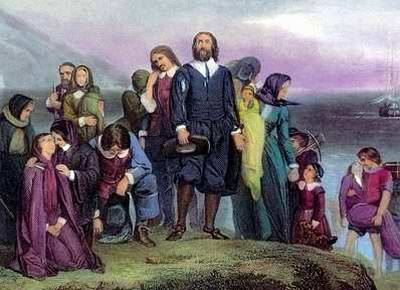
We Americans are very religious people. Over 90% of us believe in God. Over two thirds of us belong to a church or other house of worship. But surveys show that we don't know much about our religion or the great religions of the world. This blog is designed to help. We'll take it one step at a time. Hopefully you'll see how much you already know, and you'll learn a few things along the way. As St. Peter once wrote, "Add to your faith . . . knowledge!" Blessings to You, Pastor Rich Knight
What is Christian Literacy?
Literacy refers to the ability to use a language - to know what words means, to be able to use grammar, sentence structure, to be able to converse in that language is to be literate.
Religious literacy means having the ability to understand and speak about our faith intelligently. It’s the ability to communicate the basic tenets of our religion.
I'm very grateful to B.U. Professor Stephen Prothero for his excellent book, "Religious Literacy: What Every American Needs to Know and Doesn't." This book, along with my desire to teach the faith, served as the inspiration for this effort.
Thursday, June 21, 2012
Denominations
Why are there so many different denominations?
I have two answers:
One is, Different Strokes for Different Folks
Even if there was only one official institutional church there would still be many different kinds of churches. It's because Christians, like all people, come in many different varieties. Some like formality; others not so much. Some like jazz or classical music, while others listen to country, rock or folk. Some like an organization where everyone shares the same views, while others appreciate a church that is intentionally diverse. So it's only natural that we have a variety of flavors when it comes to this thing called "church."
Here's my other answer: It's Europe's Fault.
Most of the different denominations today got their start in Europe centuries ago. Folks simply brought their brand of Christianity to the New World. The Italians, Polish and Irish brought their Catholicism. The Scots brought Presbyterianism. The Germans brought Lutheranism. The British brought the Anglican/Episcopal Church as well as Congregationalism. So it's all Europe's fault!
Question, I - Do you pick your religious expression or does it pick you?
Question, II - How do you think God feels about the variety of religions, denominations and sects found on planet earth?
Prayer: Gracious God, thank you that the family of Christ is a large one. Thank you for the freedom to be who you made us to be and for the privilege of worshipping you in many and various ways. Increase our sense of oneness with Christ-followers everywhere. In His Name. Amen.
Extra Credit:
Church History Timeline - some dates might help
451 AD - the Coptic Christians were separated from Roman Christianity by
the Council of Chalcedon.
1054 AD The church splits into East & West. The West was Roman Catholic.
The East was Eastern Orthodox.
1517 - Martin Luther's Reformation begins, Protestantism born.
Key figures = Luther, Ulrich Zwingli, John Calvin, John Knox
1520s - Anabaptist Movement begins - Baptists, Quakers, Mennonites
1533-34 Anglican Church separates from Rome due to Henry VIII marital issues
1560s Non-Conformist Movement = Puritans, Congregationalists, Methodists,
Plymouth Brethren
1630-1780s - Puritan movement dominates America
1730s & 40s - Great Awakening in America, religious revival
1790s - 1850- Second Great Awakening in America, religious revival but
also included social issues such as the abolitionist movement, temperance
and women's rights.
1900s to present - Pentecostal movement worldwide (Assemblies of God,
Nazarenes, charismatic movement), Ecumenical movement in US, great
cooperation among churches, mergers of denominations such as the formation
of the United Church of Christ.
Thursday, June 14, 2012
Creeds
Although it's not quite fashionable today, I have to admit I like the creeds.
I like 'em for two reasons. One is they help us articulate our faith. "I believe in God, the Father almighty, Creator of heaven and earth, and in Jesus Christ, his only Son, our Lord." I believe. Articulating the faith is a much needed ability these days among Christians. The creeds help us.
The other reason I like the creeds is that I love thinking back to the faith-filled believers who gathered together more than a thousand years ago to try and express the deepest truths of our faith. Imagine their task: how do we articulate the mystery of the Trinity in human words?
"And in one Lord Jesus Christ, the only-begotten Son of God, begotten of the Father before all worlds; God of God, Light of Light, very God of very God; begotten, not made, being of one substance with the Father."
"And I believe in the Holy Spirit, the Lord and Giver of Life; who proceeds from the Father and the Son; who with the Father and the Son together is worshipped and glorified; who spoke by the prophets."
Question: Do you have to understand and agree with everything in a creed to recite and appreciate it?
Another question (or two): Why have Christians been moved to create creeds and catechisms throughout the centuries? In what ways has this been helpful and not always so helpful?
And yet another question: Can you be doctrinal without being doctrinaire?
Prayer: Lord of the ages, Lord of eternity, give me the words to recite my creed based on my understanding of you, revealed in scripture and in my life. Amen.
Extra Credit
The Nicene Creed (4th C.)
I believe in one God, the Father Almighty, Maker of heaven and earth, and of all things visible and invisible.
And in one Lord Jesus Christ, the only-begotten Son of God, begotten of the Father before all worlds; God of God, Light of Light, very God of very God; begotten, not made, being of one substance with the Father, by whom all things were made.
Who, for us men and for our salvation, came down from heaven, and was incarnate by the Holy Spirit of the virgin Mary, and was made man; and was crucified also for us under Pontius Pilate; He suffered and was buried; and the third day He rose again, according to the Scriptures; and ascended into heaven, and sits on the right hand of the Father; and He shall come again, with glory, to judge the quick and the dead; whose kingdom shall have no end.
And I believe in the Holy Spirit, the Lord and Giver of Life; who proceeds from the Father and the Son; who with the Father and the Son together is worshipped and glorified; who spoke by the prophets.
And I believe in one holy catholic and apostolic Church. I acknowledge one baptism for the remission of sins; and I look for the resurrection of the dead, and the life of the world to come. Amen.
The Apostles Creed
(Found in various versions between the 2nd & 9th C. Not written by the apostles, but called that because it expresses their faith.)
I believe in God, the Father almighty, Creator of heaven and earth,
and in Jesus Christ, his only Son, our Lord, who was conceived by the Holy Spirit, born of the Virgin Mary, suffered under Pontius Pilate, was crucified, died and was buried; he descended into hell; on the third day he rose again from the dead; he ascended into heaven, and is seated at the right hand of God the Father almighty; from there he will come to judge the living and the dead.
I believe in the Holy Spirit, the holy catholic Church, the communion of saints, the forgiveness of sins, the resurrection of the body, and life everlasting. Amen.
The Weakness of the Creeds
(Found in various versions between the 2nd & 9th C. Not written by the apostles, but called that because it expresses their faith.)
I believe in God, the Father almighty, Creator of heaven and earth,
and in Jesus Christ, his only Son, our Lord, who was conceived by the Holy Spirit, born of the Virgin Mary, suffered under Pontius Pilate, was crucified, died and was buried; he descended into hell; on the third day he rose again from the dead; he ascended into heaven, and is seated at the right hand of God the Father almighty; from there he will come to judge the living and the dead.
I believe in the Holy Spirit, the holy catholic Church, the communion of saints, the forgiveness of sins, the resurrection of the body, and life everlasting. Amen.
The Weakness of the Creeds
Notice that there's not a lot in them about discipleship, prayer, mission, worship, love thy neighbor, etc. It's all Right Beliefs (Ortho-doxy) and no Right Practice (ortho-praxis).
Friday, June 8, 2012
Trinity
Martin Luther once said, "To deny the Trinity endangers your salvation; to try to comprehend the Trinity endangers your sanity."
Let's give it a try anyway.
You might be surprised to learn that the word "Trinity" is never used in the New Testament. The concept of the Trinity, however, is certainly found there. The word of course means "Three in one." Tri-Unity. Three in Unity.
In Matthew 28 Jesus says "Go forth into the world and make disciples of all nations and baptize them in the name of the Father and of the Son and of the Holy Spirit."
At Jesus' own baptism God the Father spoke words of blessing upon his Son - "This is My Beloved Son, in whom I am well pleased." And God the Holy Spirit came down upon Christ in the form of a dove to empower him for his ministry.
In John 14 Jesus speaks of the Father sending the Holy Spirit, the Advocate, the Spirit to be with us and in us.
John 14:16 - "I will ask the Father and he will give you another Advocate, to be with you forever."
John 14:25-26 - "These things I have spoken to you while I am still with you. But the Advocate, the Holy Spirit, whom the Father will send in my name, will teach you everything, and remind you of all that I have said to you." So, God the Son is talking about God the Father sending God the Holy Spirit to be with them forever."
Early Church Theologians looked at these passages and more, and said this:
God the Creator is God.
Christ, the Word made flesh, is God. And,
The Holy Spirit is God - God with us and in us.
So they came up with this concept of one God in three "persons." One God with three expressions.
St. Patrick compared it to the 3 extensions of a clover leaf.
A. If you look at the Creator/God the Father passages you learn many important things about God. We serve a God who is holy, a God of justice, a Covenant Maker, the Creator of all that is, etc. That's one extension of the clover leaf.B. If you look at the extension of the leaf of Christ, you learn other things about God - the God of grace and forgiveness, the concepts of salvation, eternal life, discipleship and more.
C. And if you look at the extension of the Holy Spirit you learn yet even more - the Gifts of the Spirit, the Indwelling of the Spirit, the Fruits of the Spirit, etc.
It's the one God with 3 expressions, 3 roles, 3 manifestations. Of course it's all mystery and metaphor. It's the best we can do with our finite minds seeking to understand the Infinite One as revealed in our scriptures.
Theologians talk about the Trinity as God over us, God for us, and God with us.
God the Creator is God over us, God greater than us - the expression of
God as Almighty God, the Majestic Creator of the entire Universe.
Jesus Christ is the expression of God who distinctly reveals to us how much God is for us, and how far God is willing to go to show us this love, even to the Cross.
And God the Holy Spirit is God with us and in us.
God over us.
God for us.
God with us.
I think those simple words get at the heart of the Trinity - who God is
and how God relates to us.
Here's a thought: We need all three. We need a God who is over us, greater than us, mightier than us. But we also need a God who is decisively for us. Christ came to show us how much we are loved. And we need a God who is with us and in us, God the Holy Spirit. Otherwise God is way up there, and not down here in our midst and in our souls.
Prayer: Thank You, Precious Lord, for being exactly the God we need. Amen.
Extra Credit - Trinity Illustrations
In addition to the clover leaf here are a few more.
A. I am a father and a son, and my spirit is evident in my children.
B. An apple has skin, the meat of the apple and the core. All comprise the apple. Distinct, yet one.
C. The sun, its rays and light itself. Distinct yet emanating from one.
D. Ice, liquid and steam. Different expressions of the same thing, H2O.
Tuesday, May 29, 2012
Pentecost!
You know, every so often in the course of human history there comes a day
that changes everything. July 4, 1776 was one of those days, the birth of
our nation. June 6, 1944 was another one of those days, D-Day, the
decisive invasion of WWII. There have been other important days in human history. Aug. 3, 1977, the birth of Tom Brady, or May 17, 2003, the day the Red Sox signed Big Papi.
In our faith, there have been big days as well, days that changed everything. The day (or night) when Christ was born. The day we now call Good Friday, and of course, Easter Sunday.
Do you know that Pentecost is one of the biggest days in our faith? In the 2000 years of recorded Biblical history, Pentecost is on the short list of most important days - because it changed everything. Ever since the Day of Pentecost God is now available to all.
In the Old Testament, God seemed only available to a select few - prophets, priests & kings. Only they had access to Almighty God, and even then it was only on special occasions - such as on the Day of Atonement, when the High Priest would enter the Holy of Holies in the Temple, the most sacred place on the face of the earth, and he'd offer a sacrifice and commune with God. Special person, special place, special time. Pentecost is the undoing of all that.
Acts 2 records the Day of Pentecost when the Holy Spirit was given to the
earliest Christians. We find these words:
"I will pour out my spirit upon all people - your sons and daughters shall
prophesy, and your young men shall see visions and your old men shall
dream dreams." - Acts 2:17
That's Pentecost. It changed everything.
Here's a thought: The Holy Spirit is God with us and in us.
Meditate on the Spirit by focusing on your breathing.
Breath in the Holy Spirit.
Breath out the things in your life that don't belong.
Prayer: Thank You, Holy Spirit, that You are God's power within me. Fill
me. Strengthen me. Use me. Spirit of the Living God, fall afresh on me. Amen.
Extra Credit
The Satellite Dish Illustration
In the Old Testament only a few special people had a "spiritual satellite dish." They would be tuned in to the heavens and occasionally hear what God was up to. Then they'd tell the people about it.
Well, because of the gift of the Holy Spirit on the day of Pentecost - everyone now gets a satellite dish. Everyone and anyone can tune in to God and feel the power!
Pentecost
Pentecost was originally a Jewish holiday, held 50 days after Passover. It was known as the Feast of Weeks and the Feast of Harvest, celebrating the first harvest of the season. It was a required holiday for all those living within 20 miles of Jerusalem. Jews also made pilgrimages to Jerusalem to celebrate it. That's why there were people from all over the western world gathered there for this particular Pentecost, recorded in Acts 2.
Friday, May 18, 2012
Covenant
Now here's a word that's pretty big in our faith: Covenant.
The Bible is a book about covenants; so much so that when they decided to divide it into two sections they named the sections after the covenants found in them - the New Covenant and the Old Covenant. The word "testament" means a covenant.
A covenant is a formal agreement between two parties. It establishes an understanding between two parties, what's expected of them by the other.
When God established a covenant with Israel, God spelled out to them what's expected of God's covenant partners. The most basic and cherished of these expectations are the Ten Commandments. The Israelites carried around the tablets of the commandments wherever they went. They carried them in a large fancy box known as the "Ark of the Covenant." (see above as well as "Raiders of the Lost Ark")
The covenants of the Bible were not one-sided. God not only set forth expectations from the Israelites, God also let them know what they could expect from their Covenant Partner, the LORD. God promised them blessing, protection, land, redemption and unconditional love. The covenants of the Bible are very similar to the marriage covenant. They establish a loving partnership between God and human beings.
In the Old Testament the concept of sin is based on the covenant. Sin is breaking the covenant, being unfaithful to God, forgetting we're in a loving partnership with God.
Here's a thought: A Covenant = a Testament = a Loving Partnership
Question: How do you see your life lived in partnership with God?
Prayer: Loving God, thank you for your promises and for wanting to live in partnership with me. Help me to live as your Covenant Partner. Amen.
Extra Credit: The Major Covenants of the Bible
The Covenant of Eden - Gen. 3:15 - the promise of redemption
The Covenant with Noah - Gen. 9:9 - never to destroy the earth
The Covenant with Abraham & Sarah - Gen. 12, 15, 17
The Covenant from Mnt. Sinai - Ex. 19 & 20 - expectations
The Levitical Covenant - Number 25:12 - atonement through the priestly sacrifices
The Covenant with David - II Sam. 23:5 - the promise of Messiah through David's lineage
The New Covenant of Christ based on Faith & Grace - "A new covenant I am
making with you in my blood which is shed for your forgiveness."
Hebrews 9:15 - "Christ is the mediator of a New Covenant."
A Loving Partnership based on his sacrificial love.
Thursday, May 10, 2012
Congregationalism
What can I tell you about Congregationalism that you don't already know?
The earliest Congregationalists believed that the Protestant Reformation had not gone far enough and that the Church of England with its liturgies and ceremonies was still too "Roman" (Catholic) for their tastes. Thus they sought to "purify" the church of all Roman influences. Hence the name, Puritan.
It might surprise you to learn that the earliest Congregationalists did not believe that each congregation was to be independent of all others. Browne believed that each autonomous church owed "communal helpfulness" to every other church. In 1706 Massachusetts adopted Cotton Mather's plan that ministers be in associations with one another and be given the authority to examine and license candidates for ministry. 300 years later this structure still stands within our denomination, as the local associations of Congregational (U.C.C.) churches, now with clergy and lay representatives, have the authority to ordain. Mather's plan called for a voluntary fellowship of churches to provide mutual aid and outside assistance in handling disputes. These ministries as well are carried on today by our local association (the Andover Association of the U.C.C.) as well as by the Massachusetts Conference of the U.C.C.
One other interesting thing about Congregationalism was its influence upon American democracy. The New England town meeting grew out of the Congregational church meeting. In fact, in the earliest town meetings only church members in full standing could vote. One also can't help but think that the colonists rebellion against the Church of England also played a role in their eventual rebellion against the King of England. Furthermore, in their writings and their preaching, Congregational ministers Thomas Hooker (1586 - 1647), often called the "father of democracy" in American, and Jonathan Edwards (1703-1760), laid the groundwork for democracy, constitutional free government and even the separation of church and state.
Here's a thought: Congregationalism was more a church polity (governing) movement than a theological one; yet the earliest Congregationalists were known for their biblical theology; so much so that they were called, "People of the Book."
Question: How important is it to understand our roots, where we've come from?
Prayer: Thank You, God, for our spiritual forebears, who have "run the race" before us and have been found faithful, leaving us a great heritage of faith and discipleship. Amen.
Well, here goes.
Congregation was first a movement within the Church of England. In fact one of the first proponents of Congregationalism was an Anglican priest, Robert Browne(1550 - 1633). Browne believed that Christ was the head of the church, not the king or the queen or anyone else. He also believed that each congregation should elect its own pastor and leaders. For these radical (?) beliefs Browne was imprisoned 32 times and fled to the Netherlands.
![]() |
| Robert Browne |
It might surprise you to learn that the earliest Congregationalists did not believe that each congregation was to be independent of all others. Browne believed that each autonomous church owed "communal helpfulness" to every other church. In 1706 Massachusetts adopted Cotton Mather's plan that ministers be in associations with one another and be given the authority to examine and license candidates for ministry. 300 years later this structure still stands within our denomination, as the local associations of Congregational (U.C.C.) churches, now with clergy and lay representatives, have the authority to ordain. Mather's plan called for a voluntary fellowship of churches to provide mutual aid and outside assistance in handling disputes. These ministries as well are carried on today by our local association (the Andover Association of the U.C.C.) as well as by the Massachusetts Conference of the U.C.C.
![]() |
| Jonathan Edwards |
Here's a thought: Congregationalism was more a church polity (governing) movement than a theological one; yet the earliest Congregationalists were known for their biblical theology; so much so that they were called, "People of the Book."
Question: How important is it to understand our roots, where we've come from?
Prayer: Thank You, God, for our spiritual forebears, who have "run the race" before us and have been found faithful, leaving us a great heritage of faith and discipleship. Amen.
Friday, May 4, 2012
Christian
A friend of mine grew up in an area with a lot of conservative churches
filled with people trying to make sure he was a Christian. Defending his
faith was almost a weekly occurrence. While I generally admire the boldness and
sense of purpose behind evangelistic outreach, after a while it became
quite tedious for my friend, and he regularly searched for new and
creative answers to the question, "Are you a Christian?"
One day he answered, "I hope so." The evangelist responded, "You should be
sure!" My friend said, "I am sure of what I believe. I just hope my life
measures up in some way to my beliefs."
The story reminded me of the first title ever given to Christ-followers -
people of "The Way" (Acts 9:2). The title suggests that Christianity is a journey
and a path, a way to God and a way of life. Being a Christian is more than
just believing the right stuff. It's striving to live it.
A Christian is a heart through which Christ loves, a voice through which
Christ speaks, a pair of hands through which Christ serves, and a soul
through which Christ lives.
Here's a thought: Jesus never healed people the same way twice. His work within each one of us is unique.
Question: What is your definition of a Christian? How would you put it
into words?
Prayer: Loving God, help me to articulate what my faith means to me. Most
of all, help me to live what I believe. Amen.
Subscribe to:
Posts (Atom)